

METTLER TOLEDO is offering precision instruments and services for many applications in R&D, quality control, production, logistics and retail to customers around the world.
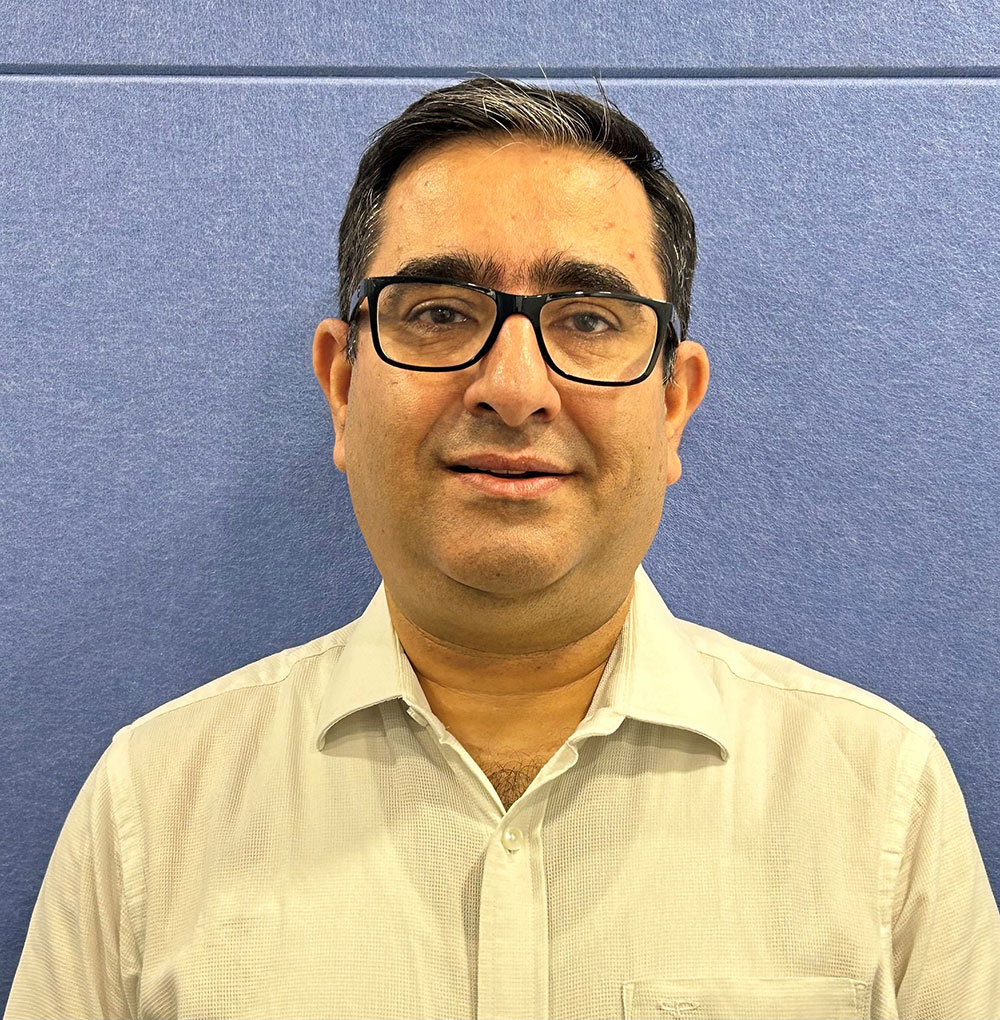
Mr Siddharth Kachroo, Head of Sales India, at Mettler Toledo India Pvt Limited. Mr. Kachroo an email interaction with Food Processing News Today (Future Today Media Group) reveals the current scenario in the Indian market and outlook for his company Excerpts.
Q1. What is the importance of metal detectors in the food processing industry?
Metal detection is a fundamental part of food safety and quality control, helping manufacturers prevent physically-contaminated products from reaching consumers and supporting compliance with industry requirements.
Metal contamination can be introduced at various stages of production, whether through raw materials such as needles, processing equipment, machinery wear, or personnel-related sources such as jewellery. A well-designed metal detection system can identify ferrous, non-ferrous and stainless steel contaminants and automatically remove affected products from the line.
Beyond food safety, reliable detection can also help reduce waste, avoid costly rework and recalls, and help protect both brand reputation and consumer confidence. The key is selecting the right system for the product, process and point on the production line.
Q2. How are metal detectors being used in the Indian food industry?
Metal detection is already well established across many areas of food manufacturing in India, particularly among larger processors, export-focused businesses and manufacturers working to international standards.
What is changing is the level of sophistication manufacturers expect from inspection equipment. It is no longer simply about detecting metal. There is greater demand for improved detection sensitivity, fewer false rejects, more automated testing, better data capture and easier integration with wider production systems.
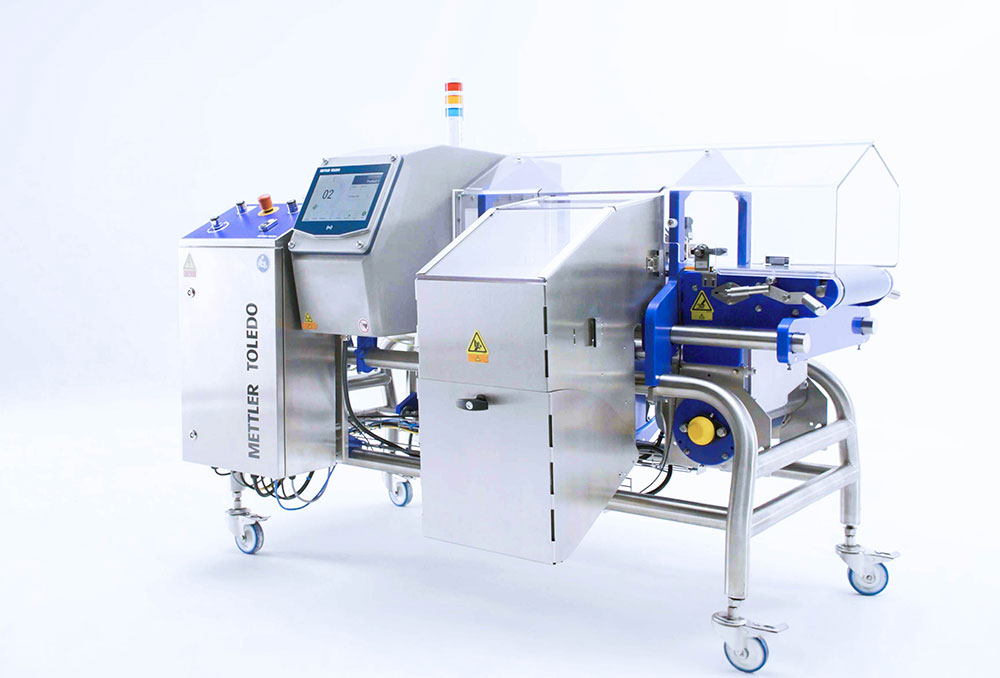
Our new M50 R-Series AdvancedLine metal detectors, for example, reflects this shift towards more intelligent metal detection. Within the series, the M56R combines Multi-Simultaneous Frequency technology with the advanced 3S PLUS algorithm in an AI-based machine learning process. This helps separate the product signal from genuine contamination in challenging products such as wet or conductive items, improving detection sensitivity while reducing false rejects.
As the Indian food industry continues to invest in automation and higher production standards, we expect this focus on connected, higher-performance inspection technology to continue.
Q3. MettlerToledo has introduced the next generation ‘Combination Systems’. Can you tell us more about it?
Combination systems bring two or more inspection technologies together in one compact solution, allowing manufacturers to carry out multiple quality control checks at the same point on the line.
For example, systems such as the CM Combi from Mettler Toledo combine high-performance checkweighing with metal detection, giving manufacturers precise weight control and contamination detection within a single footprint.The CM Combi can also be combined with a vision inspection system to make the CMV Comi to provide additional label inspectioninto one complete solution. Checkweighing can also be combined with x-ray inspection where the application requires a broader range of foreign body detection.
The benefits are very practical. Combining technologies saves valuable production space, simplifies product handling and can make operation, maintenance and changeovers more efficient. It also gives manufacturers greater visibility and control over inspection performance without adding unnecessary complexity to the line.
The latest systems bring together advances across technologies, including high-performance weighing, improved detection sensitivity and intelligent software, helping manufacturers meet increasingly demanding productivity and quality requirements.
Q4. Brief us about the new types of food safety and control measures being adopted in the food industry(metal detectors, X-rays and screenings)
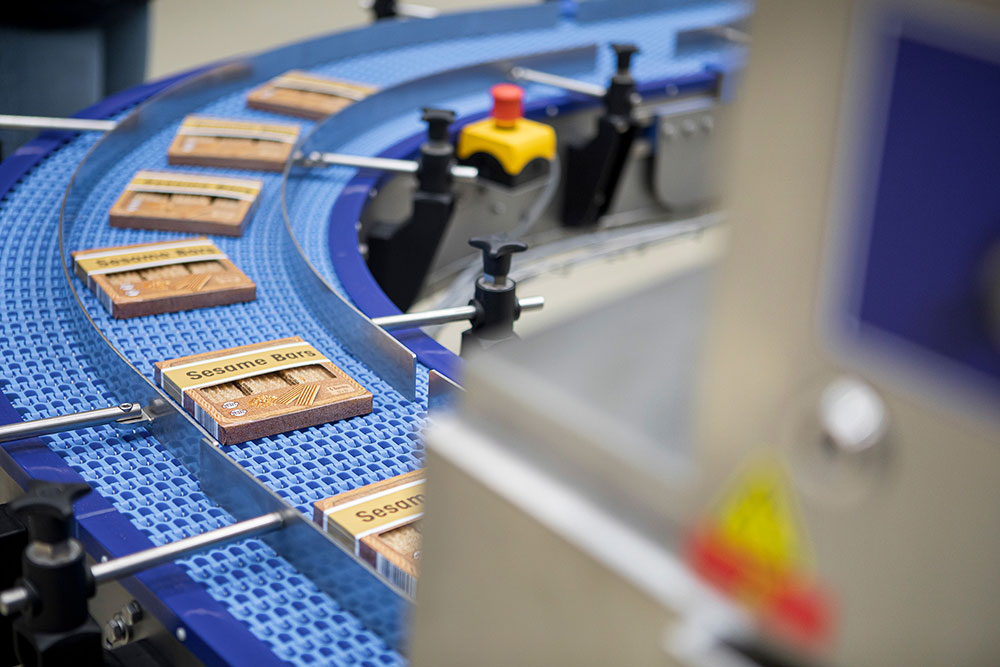
There has been a clear move away from looking at individual inspection machines in isolation. Manufacturers are increasingly taking a more joined-up, risk-based approach across the production line.
Metal detection remains highly effective where metal is the main contamination risk, while x-ray inspection can provide broader inspection capabilities as products, packaging and production requirements become more complex.
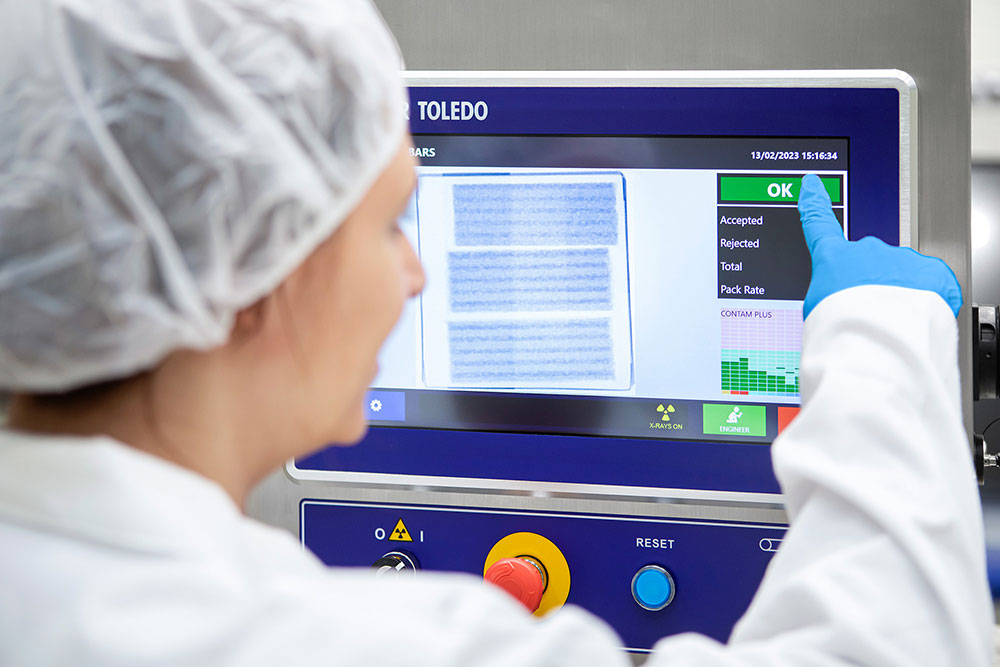
Within x-ray inspection, technologies can be matched closely to the application. For example, the X12 provides a standard x-ray inspection solution for packaged products, while the X56 DXD+ combines dual-energy x-ray with AI-enabled image analysis for more complex applications. This can help improve detection accuracy and reduce false rejects where factors such as overlapping ingredients, inconsistent densities or irregular product presentation make inspection more challenging. AIinnovations for integrity checks can now be applied across a wide range of x-ray inspection systems.
Checkweighing adds another layer of control by checking weight and completeness, while vision inspection can verify packaging and labelling.
Alongside this, software such as ProdX™ data management from Mettler Toledo can bring inspection data together, helping manufacturers monitor performance, support traceability and demonstrate compliance more efficiently. The important point is that the technology should always be selected around the actual risk and application, rather than taking a one-size-fits-all approach.
Q5. How is the foreign object detection performance of these systems measured?
For metal detection, performance is generally measured by sensitivity, or the smallest spherical metal contaminant that a system can consistently detect under normal production conditions. This is usually tested using certified test pieces made from ferrous, non-ferrous and stainless steel materials.
However, the smallest theoretical test piece is only part of the picture. Performance can also be influenced by the product itself, particularly products with high moisture or salt content, as well as aperture size, packaging, line speed and the production environment.
With x-ray inspection, performance depends on factors such as the density and size of the contaminant, product thickness and density, packaging and detector technology. Dual-energy technology can significantly improve performance in more challenging applications by analysing materials at two different energy levels. This helps the system distinguish between the product and potential contaminants more accurately, particularly where products are dense, overlapping or have varying textures, improving detection while helping to reduce false rejects.
For both technologies, repeatable performance under real production conditions is what matters. Regular testing and verification are therefore an important part of maintaining inspection standards.
Q6.‘Cutting Carbon Footprints’ has become a tagline for industries across the globe to ensure ‘Sustainable Production’. What are the initiatives taken by MettlerToledo to reduce electricity consumption in its equipment?
Reducing energy consumption is now built into the way we develop new equipment. Mettler Toledo has made sustainability targets a mandatory part of new product development, with a focus on areas including power consumption, material use and the overall lifecycle of the equipment.
We are already seeing tangible results. For example, the redesigned C2 heavy load checkweighing portfolio reduces motor power consumption by 50%, helping manufacturers lower both energy use and operating costs. In x-ray inspection, the X3720 uses detector technology that requires up to five times less power than traditional x-ray systems. Lower-power x-ray technology can also remove the need for separate cooling systems in some applications, further reducing electricity consumption and maintenance requirements.
It is also important to look beyond the energy used by the machine itself. Better inspection performance can reduce false rejects, product giveaway and unnecessary waste, helping manufacturers use raw materials and energy more efficiently across production.
This work forms part of our wider GreenMT programme. At Mettler Toledo, we maintained 100% renewable electricity sourcing in 2025 and achieved our target for zero waste to landfill, alongside continued work to reduce greenhouse gas emissions across the business.
Q7. What are the advantages if someone goes for your machinery instead of other manufacturers?
Our Inspect Protect Comply approach reflects how Mettler Toledo supports food manufacturers across the inspection process, combining technology, application knowledge and service expertise. Food manufacturers rarely have exactly the same inspection challenge, so the answer should not simply be to offer the same machine every time.
Mettler Toledo can support checkweighing, metal detection, x-ray inspection, label inspection and combination systems, which means the conversation can start with the application and the risk rather than a particular technology.
A major advantage is our ability to combine global expertise with strong local knowledge and support. Manufacturers can draw on experience from applications and markets around the world, alongside local teams who understand their production environment and relevant regulatory, food safety and retailer requirements. This becomes increasingly important for manufacturers operating across multiple markets or exporting internationally.
That support continues throughout the lifecycle of the equipment, from application testing and specification through to installation, training, performance verification and preventative maintenance. Combined with software and connectivity, this gives manufacturers a long-term inspection partner that can support both day-to-day performance and changing requirements over time.
Q8.At what capacity, is research important for food safety machinery manufacturers?
Research and development are fundamental because food production does not stand still. Lines are becoming faster, products and packaging are changing, regulatory expectations continue to develop and manufacturers are under constant pressure to improve productivity while controlling costs. That means inspection technology also has to evolve.
We are seeing significant development in areas such as metal detection, where Multi-Simultaneous Frequency technology can inspect products using more than one frequency at the same time, helping improve detection performance in challenging wet or conductive products. Intelligent signal processing can then help distinguish the signal created by the product itself from a genuine metal contaminant, improving sensitivity while reducing false rejects.
In x-ray inspection, dual-energy technology, as mentioned previously, analyses products at two different energy levels, making it easier to distinguish between the product and potential contaminants in more complex applications. Photon-counting technology goes further by collecting more detailed information from individual x-ray photons, which can provide greater contrast and help identify contaminants that may otherwise be difficult to detect. Higher-resolution detectors can also reveal smaller or more subtle differences within the product.
Inspection software is developing alongside the hardware, giving manufacturers better visibility of inspection performance, automating more routine processes and making it easier to collect and use production data.
The objective is not simply to detect smaller contaminants. It is also about reducing false rejects, automating more routine processes, making equipment easier to operate and extracting better data from the inspection process.
Q9. How efficient and economical is the metal detection system in comparison to X-ray screening system? Also, which is suited better for which food industry.
It is difficult to make a direct comparison because the two technologies solve different inspection challenges. If metal is the main contamination risk, metal detection can offer a highly effective and economical solution. It is widely used across applications including bakery, confectionery, meat, dairy, dry products, powders and pumped foods and liquids.
X-ray inspection becomes particularly valuable where manufacturers need to detect contaminants beyond metal, such as glass, stone or calcified bone. It can also be a better choice for products packaged in materials that make conventional metal detection more challenging, such as aluminium foil or some metallised packaging. X-ray can additionally perform product integrity checks, which may add further value to an application.
So, the decision should start with a HACCP-based assessment of the likely contamination risks, the product and packaging, the required detection performance and where the inspection point sits within the process.
Q10. On what parameters are the reliability and accuracy based on these metal detection systems?
Reliable metal detection depends on a combination of factors rather than one single specification. Sensitivity is important, but manufacturers also need to consider the type of metal, aperture size, product characteristics, packaging, production speed and the environment in which the detector is operating.
Product effect can be particularly challenging with wet, salty or conductive foods because the product itself can create a signal similar to metal contamination. Technologies such as Multi-Simultaneous Frequency and advanced signal processing help separate that product signal from genuine contamination, improving sensitivity while reducing false rejects.
Correct installation, regular performance testing and preventative maintenance are equally important. A highly sensitive detector only delivers value if that performance remains consistent throughout production.
Q11.How do you see the expansion of MettlerToledo in the Indian and Asian markets?
India and Asia are important markets for food manufacturing, with continued investment in processing capacity, automation and higher levels of quality control. For Mettler Toledo, the opportunity is not simply about supplying more equipment. It is about supporting manufacturers as their inspection requirements become more complex, whether that is improving contamination detection, increasing production efficiency, strengthening traceability or connecting inspection data across the line.
Having local application knowledge and service support is particularly important in a market as diverse as India. As manufacturers continue to invest in more automated and connected production, we see strong opportunities to support that development with inspection technologies that can grow alongside their requirements.