
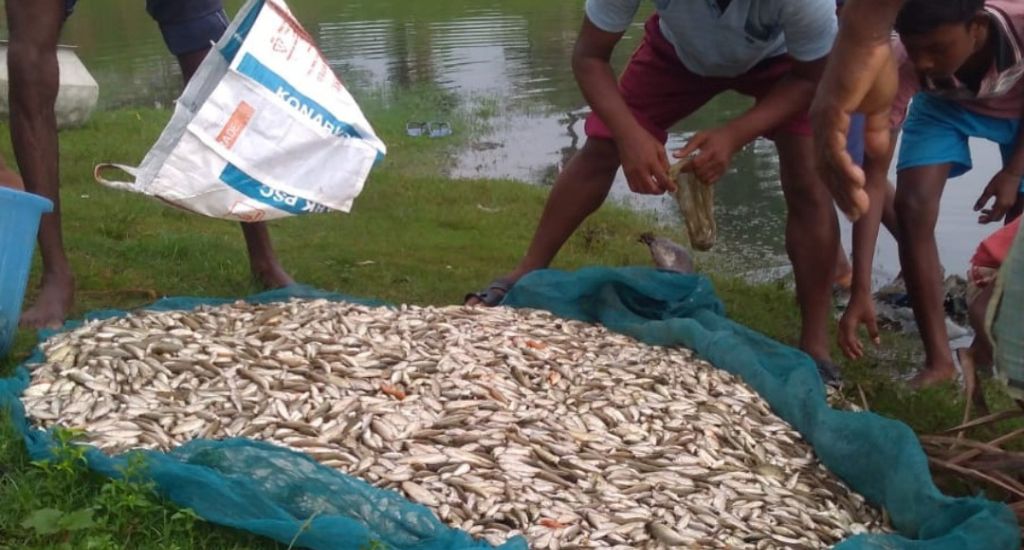
More than 205 lakh fish fingerlings have been released in the Ganga since 2017 under the Namami Gange programme as part of efforts to rebuild the river’s depleted food chain, with the National Mission for Clean Ganga (NMCG) describing fish restoration as the foundation of the river’s ecological recovery.
The NMCG said over 205 lakh Indian Major Carp fingerlings, including rohu, catla and mrigal, have been released into the river under a scientific ranching programme aimed at restoring native fish populations.
In a post on X earlier this week, the mission said, “The Ganga’s recovery did not start with the dolphin. It started with what the dolphin eats. For decades, the river’s food chain was hollowed out. The native fish that fed dolphins, that fed otters, that fed fishermen, had vanished,” it said.
The fish release programme is being implemented by the ICAR-Central Inland Fisheries Research Institute (ICAR-CIFRI) under the Namami Gange initiative.
ICAR-CIFRI have organised over 170 river ranching programmes across ecologically important stretches of the Ganga and its tributaries, releasing seeds of indigenous fish species.
According to the NMCG, the Namami Gange programme has been “rebuilding the chain from the inside” with the release of native fish species into the river.
“Every fingerling does two things at once. It feeds a river that needs an ecosystem to call herself alive. And it feeds a fisherman who needs a full net to call himself by his profession,” the mission said.
The programme focuses on native species conservation, preservation of genetic integrity and the long-term sustainability of riverine fisheries.
To improve survival rates, fingerlings measuring 10-15 cm in length and weighing about 100-120 grams are released after being reared under controlled hatchery and nursery conditions.
Describing the initiative as an example of ecosystem recovery from the “bottom up”, the NMCG said that replenishing fish stocks is helping revive the river’s natural food chain while supporting livelihoods dependent on fisheries.
“The dolphin is the headline. The fingerling is the story,” it said.
The mission acknowledged that the Ganga is “not yet as pristine as it used to be”, but said that each surviving fish contributes to the river’s future.
“Every fish that survives to spawn is the river writing her next generation. Every fingerling in her current feeds two futures: hers, and ours,” the post said.
The fish seeds are produced through artificial breeding of wild brooders collected from the Ganga to safeguard native genetic lines and improve adaptability in natural waters.
Of the 169 interventions carried out during the period, around 68 per cent were undertaken in West Bengal, followed by Bihar at 17 per cent, Uttar Pradesh at 9 per cent, Jharkhand at 5 per cent and Uttarakhand at 1 per cent.
PTI