

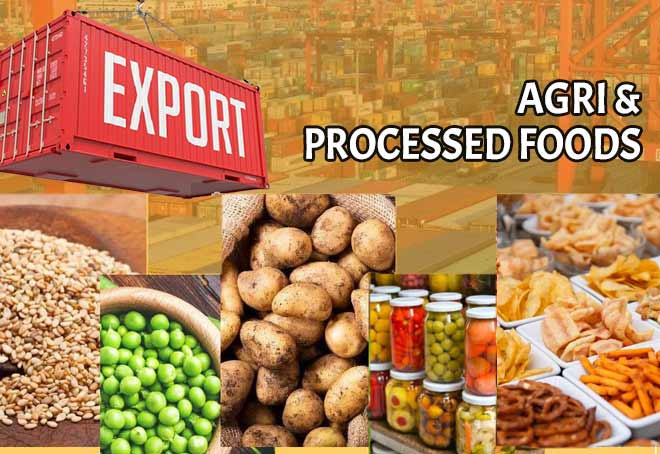
The India-UK trade pact is expected to enhance market access for a range of domestic agricultural and processed food products through duty-free or preferential tariff treatment, and improve price competitiveness vis-a-vis suppliers from other countries in the British market, experts said.
The India-UK Comprehensive Economic and Trade Agreement (CETA), which came into force on July 15 exports due to reduced tariffs, according to experts.
They said that for agriculture, the strongest opportunity lies in shifting export participation from commodity-led categories to value-added food products, as agri-food exports, including processed foods, stood at USD 49.43 billion in 2024-25 and accounted for around 11.2 per cent of India’s total exports.
“The IndiaâUK CETA is expected to improve market access through duty-free or preferential tariff treatment for a range of agricultural and processed food products, improving India’s price competitiveness against non-FTA suppliers and supporting diversification beyond traditional export destinations,” Anand Ramanathan, Partner & Consumer Industry Leader, Deloitte South Asia, said.
He also said that the pact is likely to accelerate technology adoption across export-oriented agriculture, FPO-linked supply chains and agritech suppliers because market access is increasingly tied to traceability, certification, quality assurance, and reliable delivery rather than tariffs alone.
Annual post-harvest losses are estimated at around Rs 92,651 crore, with cold-chain gaps across pack houses, ripening chambers, refrigerated transport, irradiation units and farm-gate pre-cooling acting as key constraints.
He added that digital technologies can directly address these gaps by improving traceability, reducing losses, supporting compliance and improving export reliability.
“Blockchain and IoT-based systems are especially relevant because food-sector competitiveness is moving toward batch-level visibility, temperature monitoring, supplier transaction records, predictive maintenance and real-time supply-chain intelligence,” Ramanathan said.
Blockchain-enabled traceability platforms are being adopted to record batch movement, temperature exposure and supplier transactions.
“This balanced framework is expected to encourage investment, technology transfer and deeper supply chain integration, while providing the domestic industry adequate time to enhance its competitiveness,” he added.