

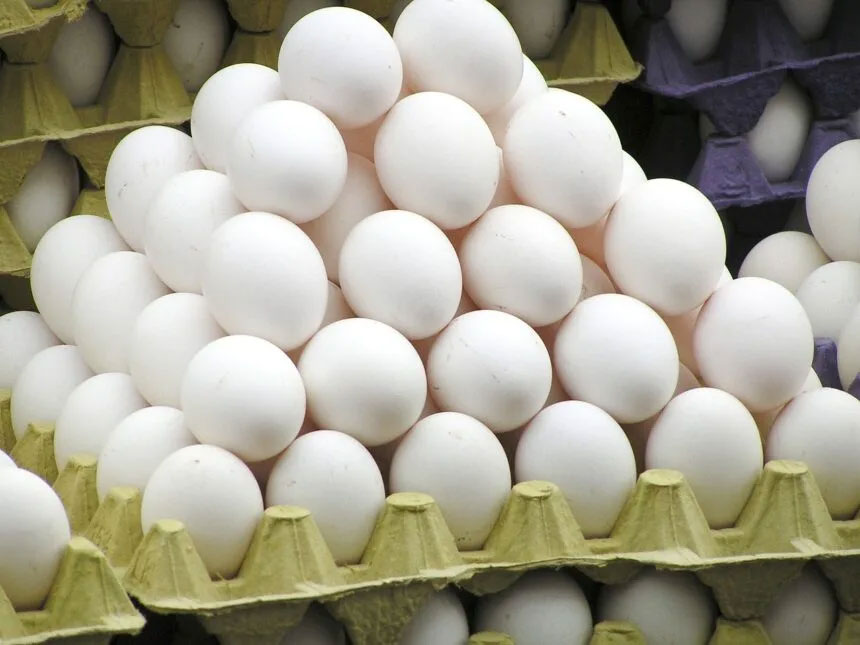
The Food Safety and Standards Authority of India (FSSAI) has categorically dismissed recent claims linking eggs to cancer risk, terming them “misleading, scientifically unsupported and capable of creating unnecessary public alarm”.
In a statement issued on Saturday, the food safety regulator clarified that eggs available in the country are safe for human consumption and that reports alleging the presence of carcinogenic substances in eggs lack a scientific basis.
The clarification comes in response to media reports and social media posts claiming detection of nitrofuran metabolites (AOZ) — substances purportedly linked to cancer — in eggs sold in India.
The food safety regulator reiterated that the use of nitrofuran antibiotics is strictly prohibited in India at every stage of poultry and egg production.
Under the Food Safety and Standards (Contaminants, Toxins and Residues) Regulations, 2011, nitrofurans are not permitted anywhere in the production chain, including animal feed and final food products.
Compliance is ensured through routine inspections, surveillance and laboratory testing.
To aid regulatory enforcement, the FSSAI has prescribed an Extraneous Maximum Residue Limit (EMRL) of 1.0 g/kg for nitrofuran metabolites.
Officials clarified that this limit is not a health-based safety threshold but a technical reference value. It represents the lowest concentration that modern analytical techniques can reliably detect in laboratories.
FSSAI officials underlined that the detection of trace residues below the EMRL does not amount to a food safety violation or pose a health concern.
“Detection of trace residues below the EMRL does not constitute a food safety violation nor does it imply any health risk,” an FSSAI official said.
The authority also highlighted that India’s regulatory framework is in line with global practices.
Both the European Union and the US prohibit the use of nitrofurans in food-producing animals and employ reference values mainly for enforcement purposes.
Variations in numerical limits across countries are due to differences in analytical methods and regulatory approaches, not differences in consumer safety standards.
On public health concerns, the FSSAI cited scientific evidence indicating that there is no established causal link between trace-level dietary exposure to nitrofuran metabolites and cancer or other adverse health effects in humans.
Reiterating this position, the regulator stated, “No national or international health authority has associated normal egg consumption with increased cancer risk”.
Urging consumers to rely on verified scientific evidence, the FSSAI advised the public to follow official advisories.
It reaffirmed that eggs remain a safe, nutritious and valuable part of a balanced diet when produced and consumed in accordance with established food safety standards.
PTI